OCR · GCSE · English Literature
Love and Relationships Anthology
Master the OCR Love and Relationships poetry anthology with this comprehensive, examiner-focused guide. We break down the complex themes of passion, power, and loss, showing you exactly how to analyse poetic methods and construct top-tier comparative essays.
- 5 min read
- 1 worked example
- 2 practice questions
- 8 key terms
Study Notes
Overview
The OCR Love and Relationships poetry anthology offers a rich exploration of human connection, spanning centuries of literary tradition. From the idealised devotion of the Victorians to the raw, sometimes disturbing realities of modern relationships, these poems capture the full spectrum of love, desire, heartbreak, and control. Examiners are looking for candidates who can move beyond simple plot summaries and engage critically with how these poets construct meaning. Top marks are awarded for sustained, conceptualised comparisons that seamlessly weave together analysis of language, form, structure, and context.
Key Themes
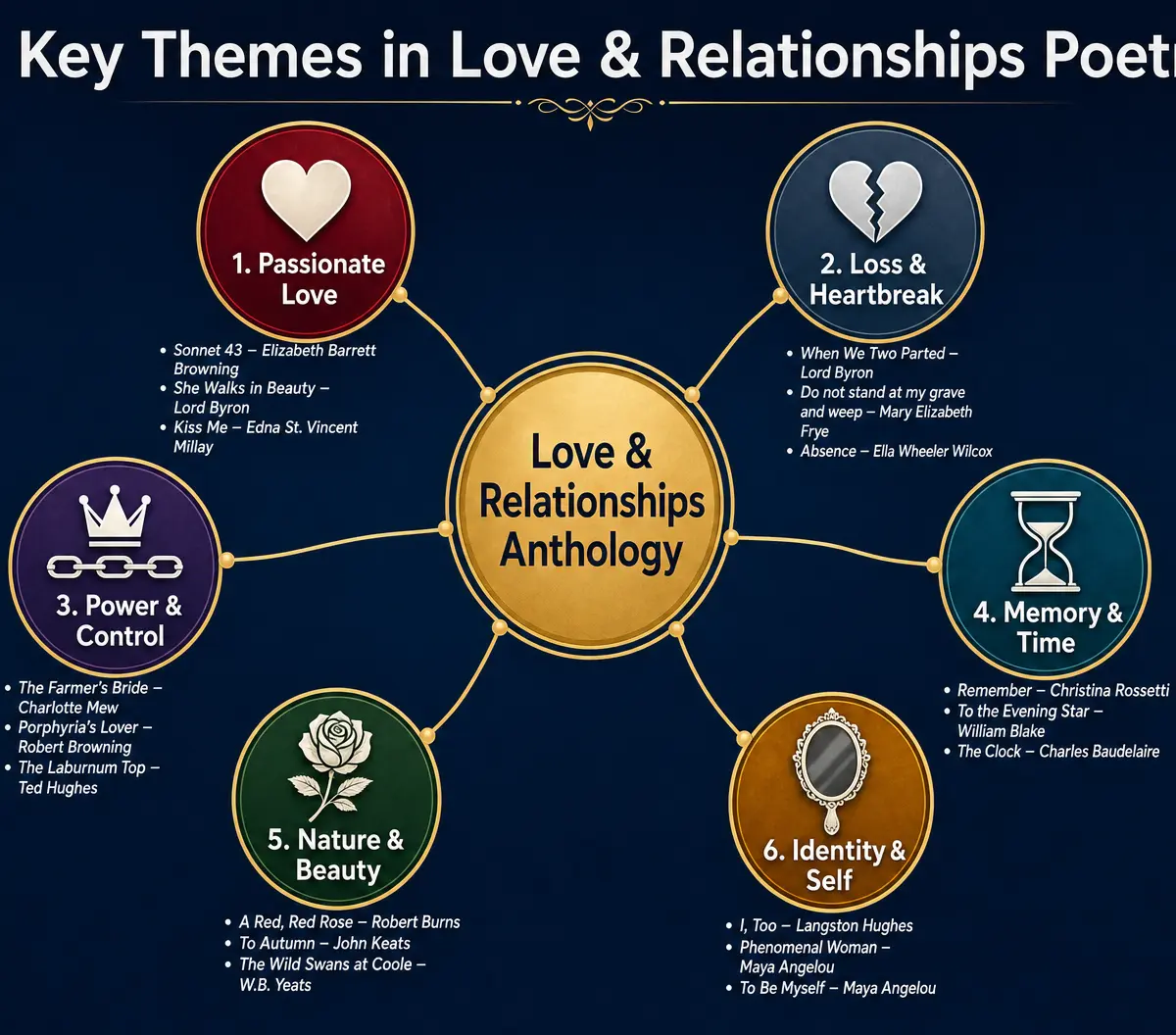
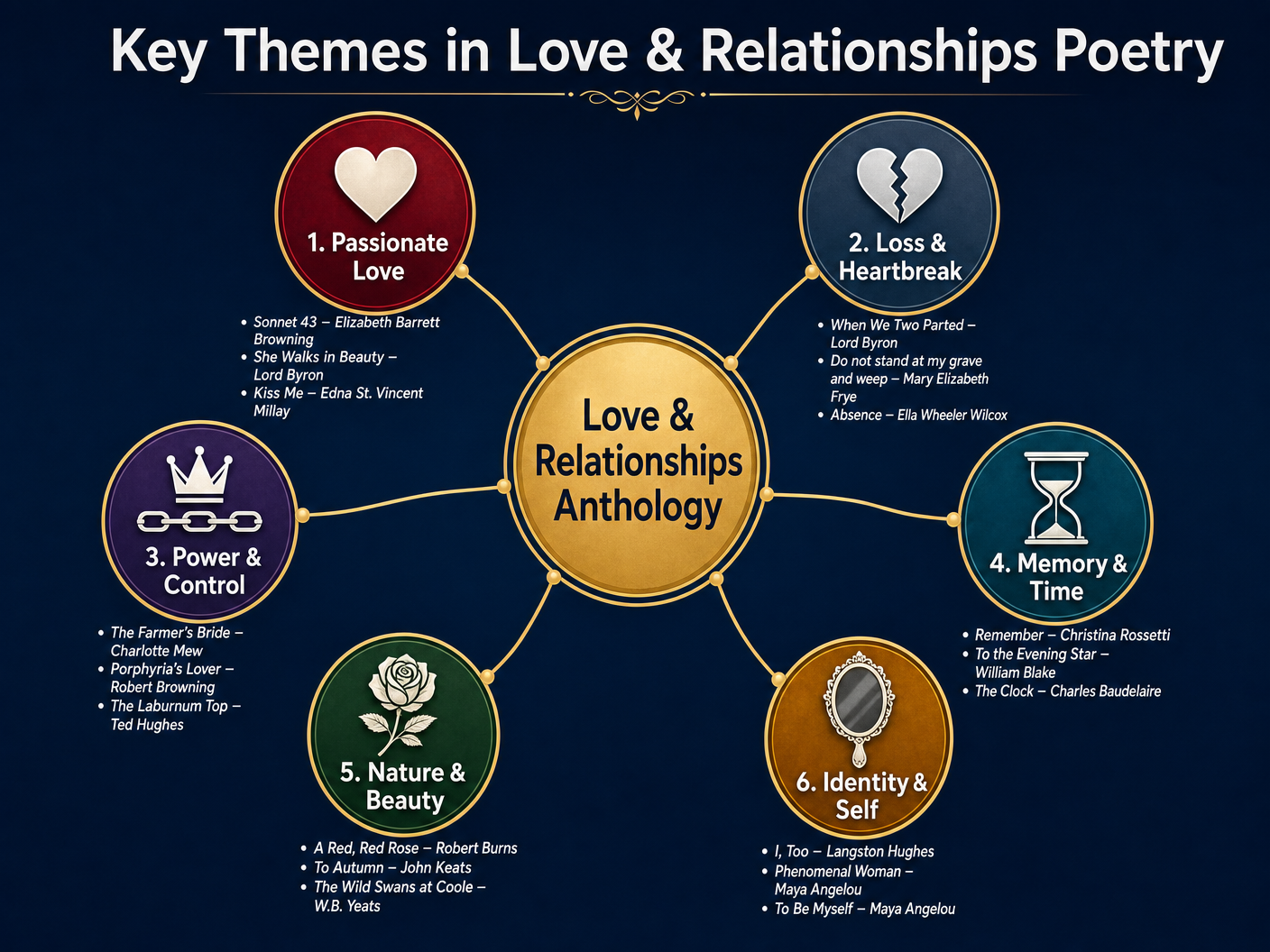
Theme 1: Passionate and Idealised Love
This theme explores love in its most intense, often spiritual or overwhelming forms. Poets frequently use traditional forms like the sonnet to elevate their subject, employing rich imagery and hyperbole to convey the depth of their devotion.
Key Quotes:
- "I love thee to the depth and breadth and height / My soul can reach" (Sonnet 43 by Elizabeth Barrett Browning) - The spatial metaphor and enjambment convey a love that is boundless and all-encompassing.
- "She walks in beauty, like the night / Of cloudless climes and starry skies" (She Walks in Beauty by Lord Byron) - The opening simile establishes a harmony of opposites, suggesting a perfect, almost ethereal beauty.
Theme 2: Loss, Grief and Heartbreak
These poems examine the painful aftermath of love, whether through death, separation, or betrayal. Poets often use disrupted structures, mournful tones, and imagery of decay or winter to reflect emotional devastation.
Key Quotes:
- "In silence and tears" (When We Two Parted by Lord Byron) - The cyclical structure of the poem (beginning and ending with this phrase) highlights the inescapable, enduring nature of his grief.
- "Better by far you should forget and smile / Than that you should remember and be sad" (Remember by Christina Rossetti) - The volta (turn) in the sestet shifts the focus from the speaker's ego to genuine, selfless love for the beloved.
Theme 3: Power, Control and Inequality
Some of the most compelling poems in the anthology explore the darker side of relationships, where love intersects with ownership, obsession, or societal oppression. These poems often feature dramatic monologues that reveal the speaker's psychological flaws.
Key Quotes:
- "We caught her, fetched her home at last / And turned the key upon her, fast" (The Farmer's Bride by Charlotte Mew) - The collective pronoun "we" and the violent verbs highlight the systemic oppression of the young bride, treated as property rather than a partner.
- "That moment she was mine, mine, fair, / Perfectly pure and good" (Porphyria's Lover by Robert Browning) - The repetition of "mine" reveals the speaker's terrifying obsession with possession, culminating in his shocking act of violence to preserve that moment.
Writer's Methods
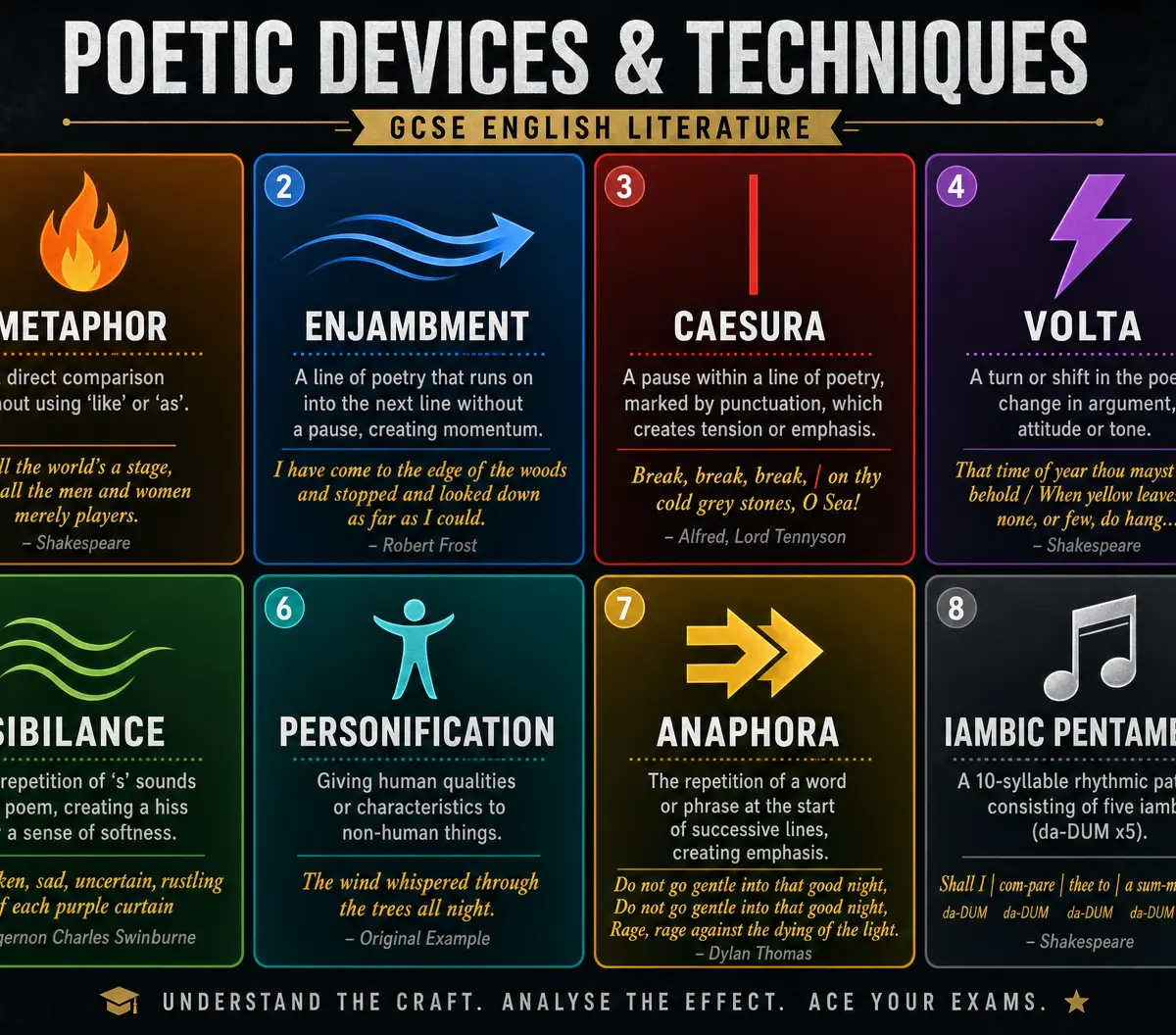
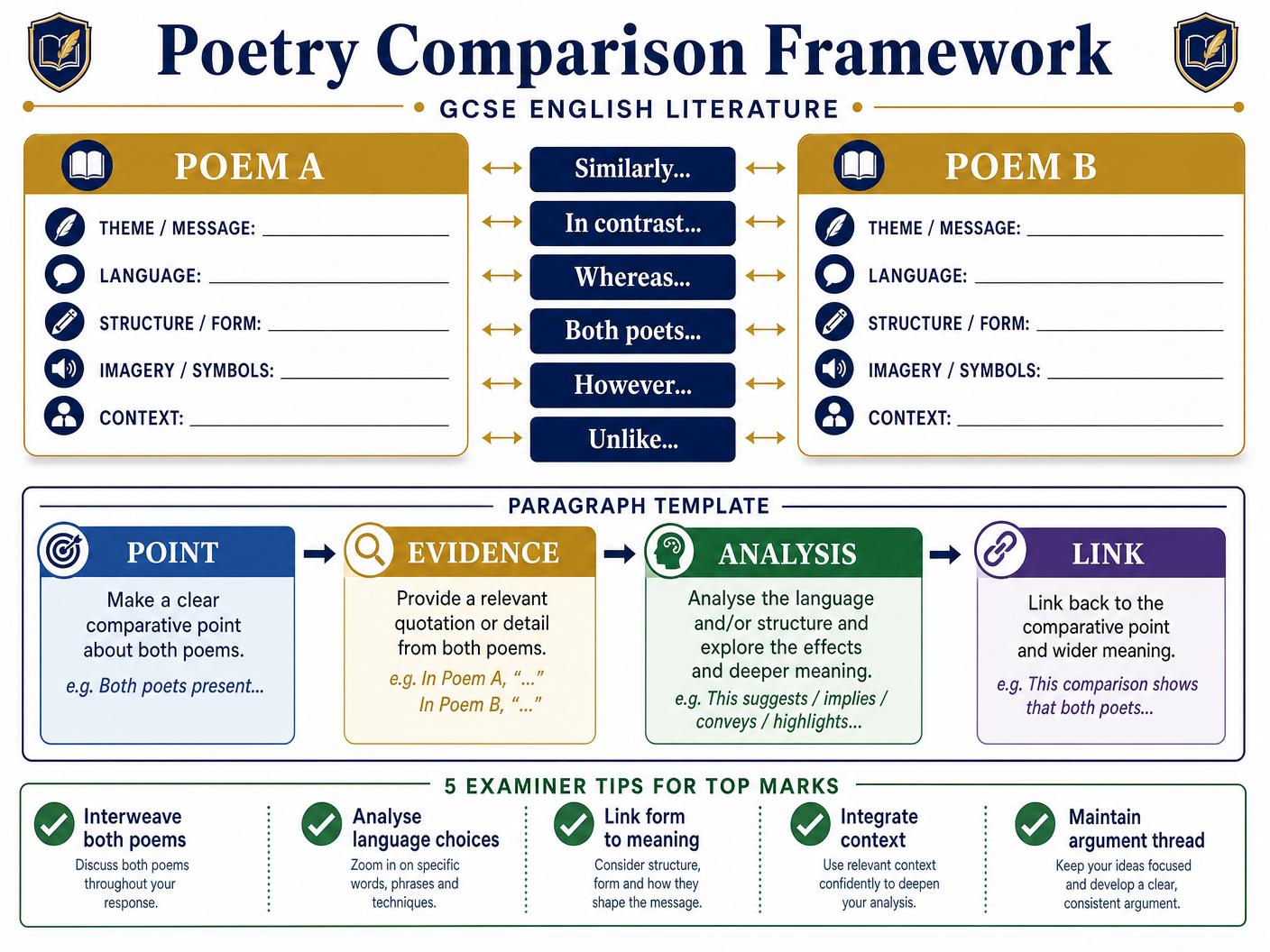
Examiners consistently reward candidates who can link a poet's structural and linguistic choices directly to the meaning and emotional impact of the poem.
Form: Consider why a poet chose a specific form. A Petrarchan sonnet (like Sonnet 43 or Remember) carries centuries of tradition associated with idealised love. When a poet uses a dramatic monologue (like Porphyria's Lover), they are deliberately constructing a persona to reveal (often unintentionally) psychological depths or flaws.
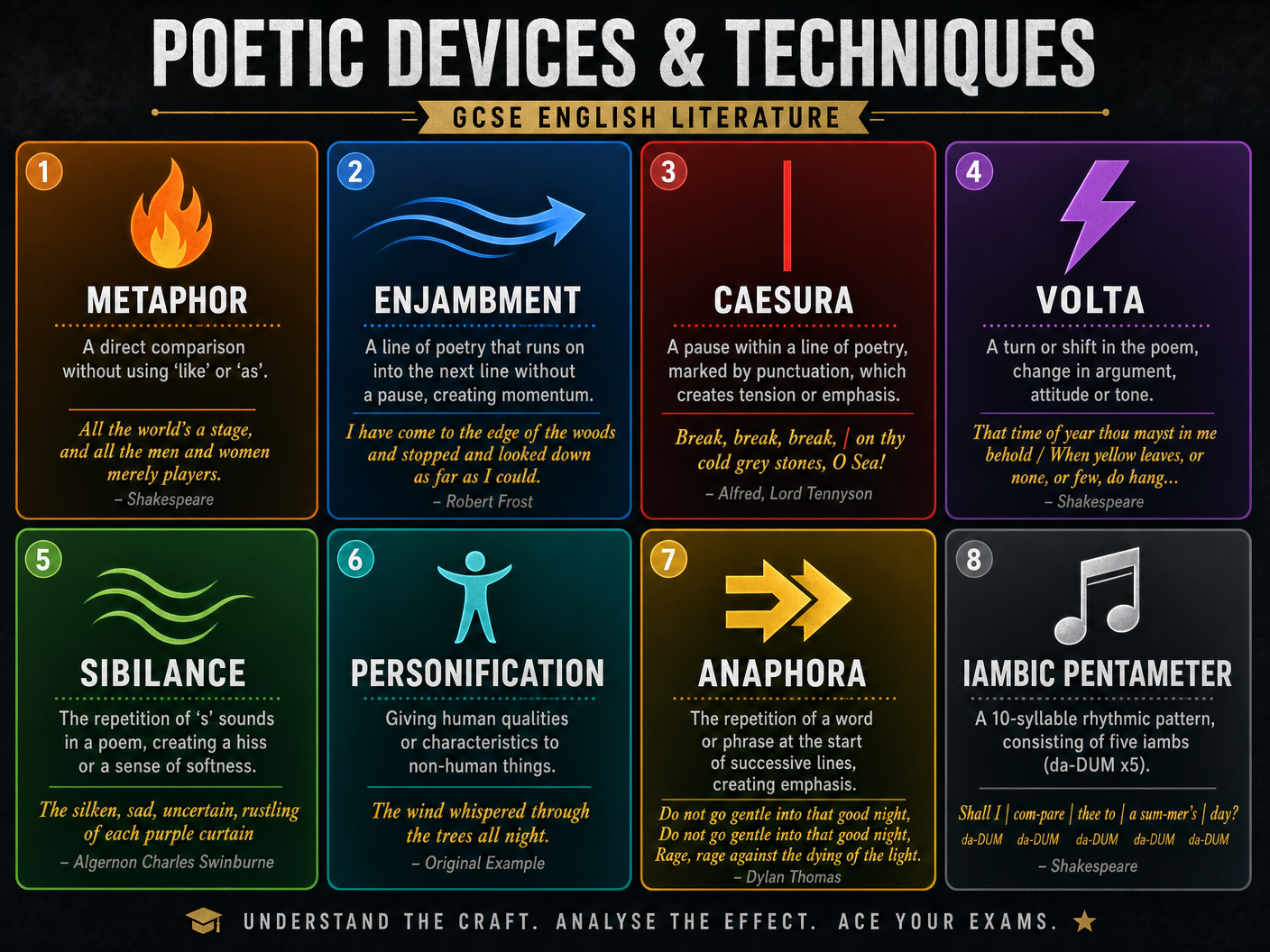
Structure: Look at the journey of the poem. Where does the tone shift (the volta)? How does enjambment create a sense of flowing passion or breathless panic? How does caesura create hesitant pauses or dramatic tension? For example, the regular ABAB rhyme scheme in When We Two Parted creates a sense of cold, inevitable finality.
Language: Zoom in on specific word choices. Analyse metaphors, similes, and personification. How does the sibilance in Byron's work create a whispering, secretive tone? How do the violent verbs in The Farmer's Bride contrast with the vulnerability of the subject?
Context
Context (AO3) must be integrated into your analysis, not bolted on as a separate history lesson. Examiners want to see how context illuminates the poem.
- Victorian Era: Poems like Sonnet 43 and Porphyria's Lover were written in an era of strict moral codes and patriarchal dominance. Browning's shocking dramatic monologue can be read as a critique of the Victorian desire to control and possess women.
- Romanticism: Byron's poems reflect the Romantic movement's emphasis on intense emotion, individual experience, and the sublime power of nature, often rebelling against rationalism.
- Early 20th Century: Mew's The Farmer's Bride reflects the shifting, yet still deeply entrenched, gender roles of the period, giving voice to the voiceless rural woman.
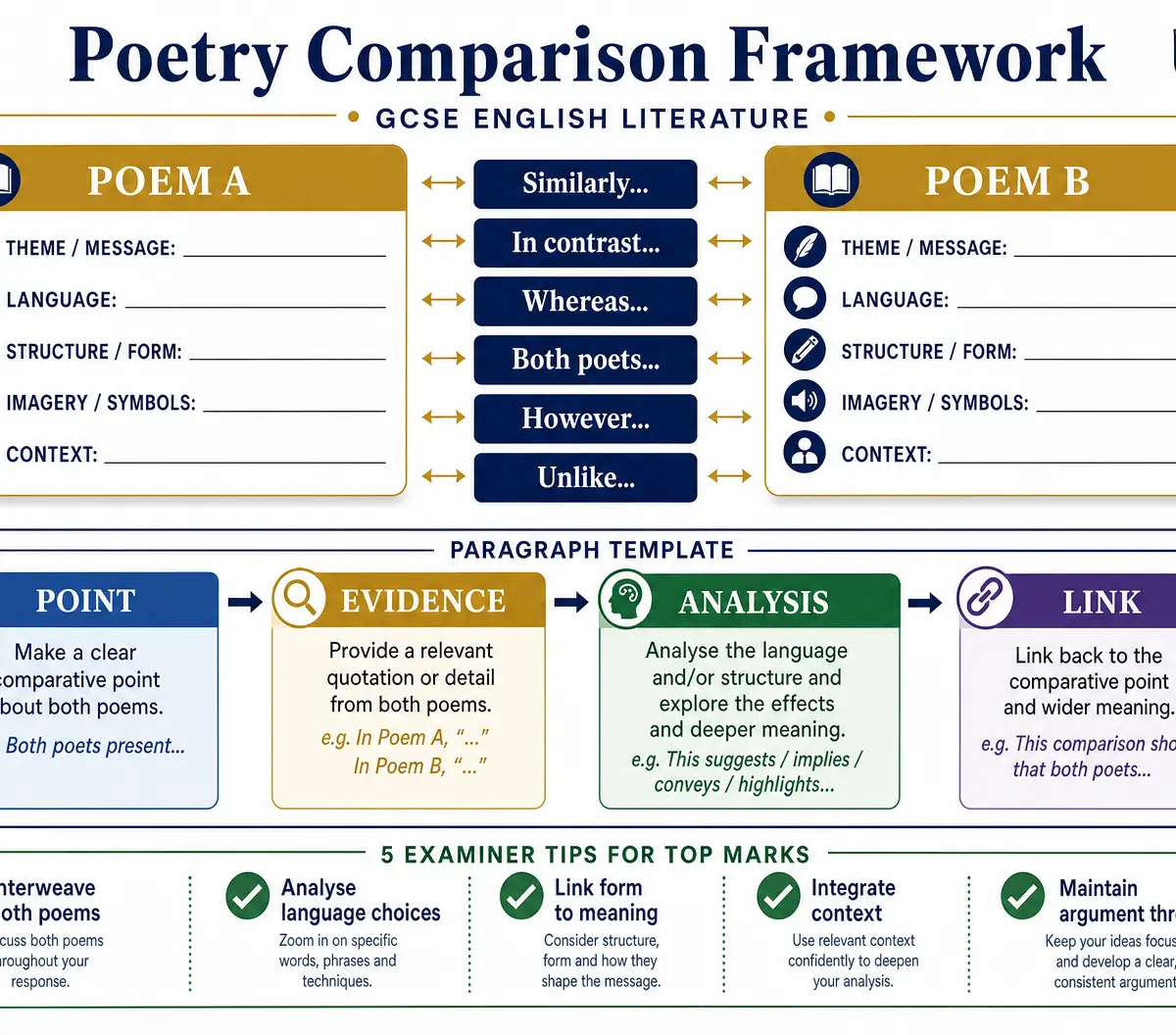
Visual Resources
3 diagrams and illustrations
Interactive Diagrams
1 interactive diagram to visualise key concepts
Conceptual Flow Outline
The Structure of a Petrarchan Sonnet (e.g., Remember, Sonnet 43)
Worked Examples
1 worked example — open one to explore the question and available guidance.
Practice Questions
Test your understanding — click to reveal model answers
Compare how poets present the desire to control a partner in 'The Farmer's Bride' and one other poem from the anthology. (30 marks)
Hint: Porphyria's Lover is the perfect pairing here. Both feature male speakers attempting to control female partners, but the methods and outcomes differ drastically.
Compare how poets present the intensity of love in 'Sonnet 43' and one other poem from the anthology. (30 marks)
Hint: Consider pairing this with 'She Walks in Beauty' for a comparison of idealised love, or 'Porphyria's Lover' for a contrast between spiritual devotion and dangerous obsession.
Test your understanding of Love and Relationships Anthology
Active recall beats re-reading. Take an instant quiz now to test what you’ve learned and lock it into long-term memory.
7 days Premium · Then free forever · No card, no charge